

Why Is 10-12% Alkalized Organic Cocoa Powder Preferred in Beverage and Protein Powder Formulations
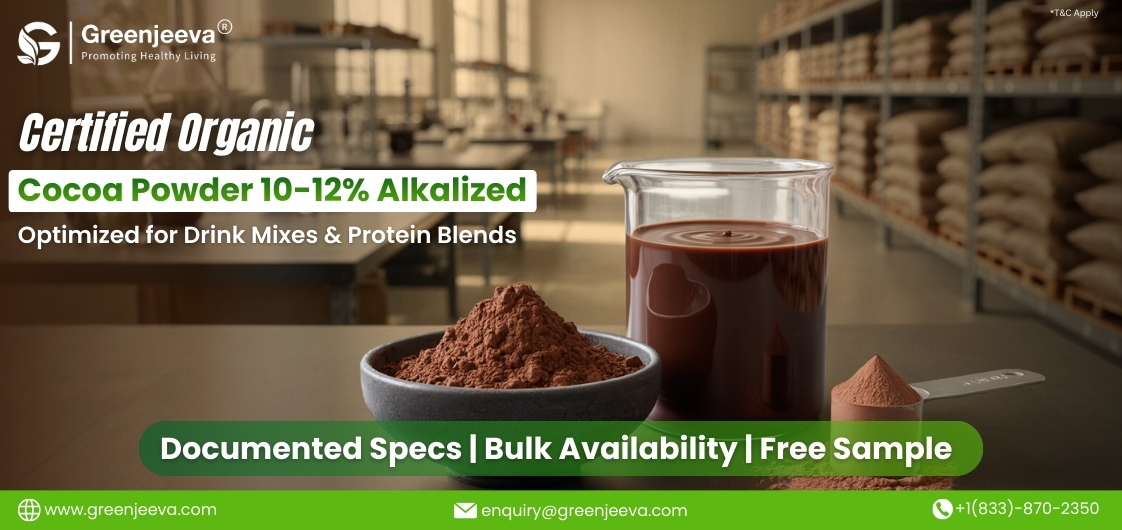
In beverage and protein powder manufacturing, ingredient selection affects flavor balance, mixability, color uniformity, and processing efficiency. Among cocoa-based ingredients, Organic Cocoa Powder, 10-12% Alkalized is widely used because it offers a consistent sensory profile and predictable functional performance in dry blends and reconstituted systems. For procurement and R&D teams, the preference is less about trend and more about how this specific cocoa format behaves under real manufacturing conditions.
Below is a technical breakdown of why this version of Theobroma cacao powder is frequently specified in formulation briefs for beverage and protein applications.
What makes 10-12% fat cocoa powder suitable for beverage and protein formulations
The 10–12% fat range provides balanced mouthfeel, flow behavior, and dispersion, which are critical in powdered drink and protein systems.
The residual cocoa butter level in Organic Cocoa Powder 10-12% Alkalized plays a key functional role. Powders in this fat range deliver:
- Moderate richness without excess oiliness
Higher fat cocoas can cause floating or clumping in beverage powders. Lower fat grades may feel thin. The 10–12% range supports a smoother texture when reconstituted.
- Improved lubrication in dry blending
This helps with uniform mixing in protein blends containing plant proteins, fibers, and minerals.
- Better bulk handling
The fat level supports flow during conveying, dosing, and filling, which is important in high-speed powder lines.
For protein powders especially, where multiple dry ingredients compete for dispersion, this cocoa format contributes to a more stable and manageable powder system.
How does cocoa powder alkalized improve flavor and color in protein drinks
Alkalization reduces acidity, darkens color, and creates a smoother cocoa profile that fits fortified beverage systems.
Alkalized cocoa powder (Dutch processed) is treated with approved alkaline agents to adjust pH and modify flavor compounds. Compared to natural cocoa, it offers:
- Lower acidity
This reduces sharp or sour notes that can clash with proteins, vitamins, and minerals.
- Darker and more uniform color
Beverage manufacturers rely on consistent visual appearance across batches. Alkalized cocoa produces a deeper brown tone, which is preferred in chocolate-flavored drinks and shakes.
- Smoother flavor perception
Protein systems, especially those based on pea, rice, or soy, often carry earthy or bitter notes. Alkalized cocoa helps round out the overall flavor profile without dominating it.
These traits make alkalized cocoa a common choice when developing ready-to-mix beverage powders and high-protein drink blends.

Why is Organic Cocoa Powder 10-12% Alkalized easier to disperse in beverage systems
Alkalization improves wettability and suspension behavior, supporting better mixing in instant beverage powders.
One of the technical advantages of cocoa powder non-alkalized vs. alkalized cocoa powder is dispersibility.
Alkalized cocoa powders typically show:
- Improved wettability in water or plant-based milks
- Reduced surface tension, helping powder particles hydrate more evenly
- Less visible sediment in properly formulated systems
For instant beverage manufacturers, this means fewer issues with floating particles or undissolved clumps, especially when cocoa is combined with proteins, gums, or micronutrients. This functional reliability is a key reason R&D teams often default to alkalized organic cocoa for beverage lines.
How do cocoa powder flavonoids and composition influence formulation behavior
Cocoa powder flavonoids and other natural compounds affect color, astringency, and interactions with other ingredients.
Cocoa powder flavonoids are naturally occurring polyphenolic compounds in Theobroma cacao powder. While alkalization reduces their levels compared to non-alkalized cocoa, they still contribute to:
- Color development during processing
- Astringency and bitterness balance
- Interactions with proteins and minerals in complex formulations
From a manufacturing perspective, these compounds are part of the reason cocoa behaves differently from synthetic flavors. Their presence influences how cocoa integrates into high-protein and fortified systems, especially in terms of taste balance and color stability over shelf life.
What is the difference between Organic non-alkalized and alkalized formulations?
Non-alkalized cocoa is more acidic and lighter in color, while alkalized cocoa offers a smoother flavor and darker appearance.
When comparing Organic Cocoa Powder Non-Alkalized with alkalized versions:

Non-alkalized cocoa may be selected for certain bakery or clean-label positioning needs, but in beverages and protein powders, alkalized cocoa is often preferred for its smoother integration and consistent sensory performance.
What should buyers check when sourcing bulk alkalized cocoa powder for beverage manufacturing
Buyers should review fat content, pH, heavy metal data, microbiological specs, and certification status before approving a supplier.
When working with a bulk cocoa powder ingredient supplier, procurement teams typically assess:
- Fat content confirmation (10–12% range)
- pH specification to ensure formulation compatibility
- Color parameters for batch-to-batch consistency
- Microbiological limits for beverage and powder applications
- Heavy metal testing, particularly cadmium and lead, aligned with internal and U.S. regulatory expectations
Documentation often includes a Certificate of Analysis, organic certification, allergen statements, and safety data sheets. Many U.S. manufacturers prefer working with a bulk cocoa powder supplier in USA to support shorter lead times and clearer regulatory alignment.
Why does certification matter when selecting a Certified Cocoa Powder supplier
Certification supports regulatory compliance, traceability, and acceptance in organic finished products.
A Certified Cocoa Powder supplier should be able to provide:
- Valid organic certification recognized for the U.S. market
- Food safety certification under a GFSI-benchmarked scheme
- Traceability from origin to finished powder
For brands producing organic beverage or protein products, using properly certified cocoa is essential for maintaining finished product compliance and audit readiness.
Conclusion
The preference for Organic Cocoa Powder 10-12% Alkalized in beverage and protein powder formulations comes down to functionality. Its balanced fat content supports mouthfeel and blending, alkalization improves flavor smoothness and color consistency, and its physical properties make it easier to disperse in reconstituted drinks. When paired with strong documentation and quality controls from a reliable cocoa powder ingredient supplier, it becomes a dependable component in large-scale, fortified powder systems.
If your team is evaluating sourcing options, Green Jeeva supports manufacturers with documented, batch-specific 10-12% alkalized organic cocoa powder along with samples, technical specifications, and compliance documentation suited for beverage and protein powder applications. Register for free to know more!