
Bulk Organic Turmeric Powder Export: FDA Compliance, USDA Organic Certification & Supplier Verification Guide
Demand for organic turmeric powder in the USA continues to expand across dietary supplements, functional foods, beverages, and personal care products. For procurement and sourcing teams, this demand brings a familiar challenge—finding a supplier who can deliver not just competitive pricing, but consistent quality, complete documentation, and regulatory alignment.
Working with a turmeric powder exporter involves more than evaluating a specification sheet. It requires a clear view of compliance frameworks, supply chain structure, and the supplier’s ability to maintain consistency across batches. This guide focuses on the factors that matter when sourcing at scale.
Understanding the US Market for Organic Turmeric Powder Imports
Demand Drivers Across Key Industries
Manufacturers across nutraceuticals, food processing, and cosmetics increasingly rely on organic turmeric powder to meet clean-label and certification requirements. In these applications, turmeric is typically used as turmeric root powder, not as an extract. That distinction matters—because the quality of the raw root and the processing conditions directly impact the final product.
As a result, buyers are placing more emphasis on origin, processing methods, and contamination controls rather than just price.
Import vs Domestic Sourcing Considerations
Domestic sourcing can offer shorter lead times, but supply is often limited and cost structures are higher. Importing from an experienced turmeric powder exporter provides access to scalable volumes and established cultivation networks.
However, the trade-off is clear:
An imported supply requires stronger due diligence around compliance, traceability, and documentation. Without these, cost advantages quickly turn into operational risks.

FDA Compliance Requirements for Turmeric Powder Exporters
Key FDA Regulations for Imported Botanical Powders
Any turmeric powder supplier exporting to the USA must align with the Food Safety Modernization Act (FSMA). Under this framework, the Foreign Supplier Verification Program (FSVP) places responsibility on importers to verify that their suppliers meet US safety standards.
From a supplier's standpoint, this translates to:
- FDA facility registration
- Adherence to current Good Manufacturing Practices (cGMP)
- Proper labeling and recordkeeping
For procurement teams, this means compliance cannot be assumed—it must be verified.
Documentation Buyers Should Request
A reliable supplier should be able to provide structured, batch-specific documentation. At a minimum, buyers should review:
- Certificate of Analysis (COA)
- Heavy metal testing reports
- Microbiological analysis
- Pesticide residue reports
- Allergen declarations
Well-organized suppliers make these documents accessible early in the evaluation process, often through digital platforms or upon registration. Delays or gaps at this stage are often early indicators of larger issues.
USDA Organic Certification & What It Means for Bulk Buyers
USDA NOP Standards for Organic Turmeric Powder
For bulk organic turmeric powder, USDA Organic certification ensures compliance across the entire supply chain—from cultivation to processing and export handling. Certification is governed by the National Organic Program (NOP) and requires strict adherence to approved practices.
A qualified organic turmeric powder supplier should be able to demonstrate:
- Valid organic certification for both farm and processing units
- Transaction certificates for individual shipments
- Clear traceability from origin to export
Common Gaps in “Organic” Claims
In practice, not all suppliers who label products as organic meet these standards. Common issues include:
- Certification limited only to the farm, not processing
- Missing transaction certificates
- Inconsistent documentation across batches
These gaps often surface during audits or product approvals, creating delays and compliance risks for buyers.

Supplier Verification Framework for Bulk Organic Turmeric Powder
Key Parameters to Evaluate a Supplier
Beyond certifications, supplier evaluation should focus on consistency and process control. For bulk turmeric powder, key parameters include:
- Batch-to-batch consistency in color and aroma
- Defined curcumin range within natural variation
- Controlled moisture levels to maintain stability
- Clean processing environments with contamination safeguards
These factors directly affect how the ingredient performs in manufacturing.
Traceability & Vertically Integrated Sourcing
Suppliers with vertically integrated sourcing models—where cultivation, processing, and export are closely linked—offer stronger traceability. This structure reduces dependency on intermediaries and improves visibility across the supply chain.
For procurement teams, this translates to:
- Faster qualification cycles
- Better audit readiness
- Reduced risk of substitution or adulteration
Red Flags to Watch
Certain warning signs consistently appear in high-risk suppliers:
- Significant variation in COAs across batches
- Incomplete or unverifiable certifications
- Lack of third-party testing
- Limited transparency around sourcing origin
Identifying these early helps avoid disruptions later in the supply cycle.
Quality Specifications That Matter in Bulk Turmeric Powder Procurement
Critical Technical Parameters
Unlike extracts, turmeric root powder is not standardized through concentration. Its quality depends on raw material selection and processing control. Procurement teams should define:
- Curcumin content: Typically, 2%–5% for natural powder
- Moisture content: Generally, below 10% for stability
- Mesh size: Based on application requirements
Clear specification alignment reduces variability during production.
Contaminant & Safety Benchmarks
Safety parameters are equally critical. Buyers should confirm:
- Heavy metals within regulatory limits
- Acceptable microbial counts
- Compliance with pesticide residue standards
Third-party lab validation adds an additional layer of assurance, especially for high-volume imports.

Bulk Sourcing Considerations for US Importers
MOQ, Packaging & Logistics
Bulk shipments of bulk organic turmeric powder are typically packed in fiber drums or multi-layered bags with inner liners. Buyers should evaluate:
- Minimum order quantities
- Packaging durability for transit
- Storage conditions and shelf life
Suppliers with regional warehousing in the USA or Canada can reduce lead times and simplify inventory planning.
Documentation & Import Readiness Checklist
Each shipment should include a complete documentation set:
- Bill of lading
- Certificate of origin
- Organic certification documents
- Batch-specific COA
Some suppliers streamline this process by providing pre-access to documents after registration, allowing buyers to validate before placing orders.
Pricing vs Long-Term Supply Reliability
Price remains a factor, but it should not be the primary driver. Inconsistent supply, documentation gaps, or compliance failures often lead to higher long-term costs.
Experienced procurement teams prioritize suppliers who can maintain consistency across multiple shipments, not just offer short-term price advantages.
Choosing the Right Organic Turmeric Powder Exporter
What Differentiates a Reliable Exporter
A dependable turmeric powder exporter typically demonstrates:
- Established compliance systems aligned with FDA and USDA requirements
- Transparent documentation processes
- Consistent quality across batches and shipments
Operational readiness—such as the ability to dispatch quickly from stocked inventory—also plays a role in supplier selection.
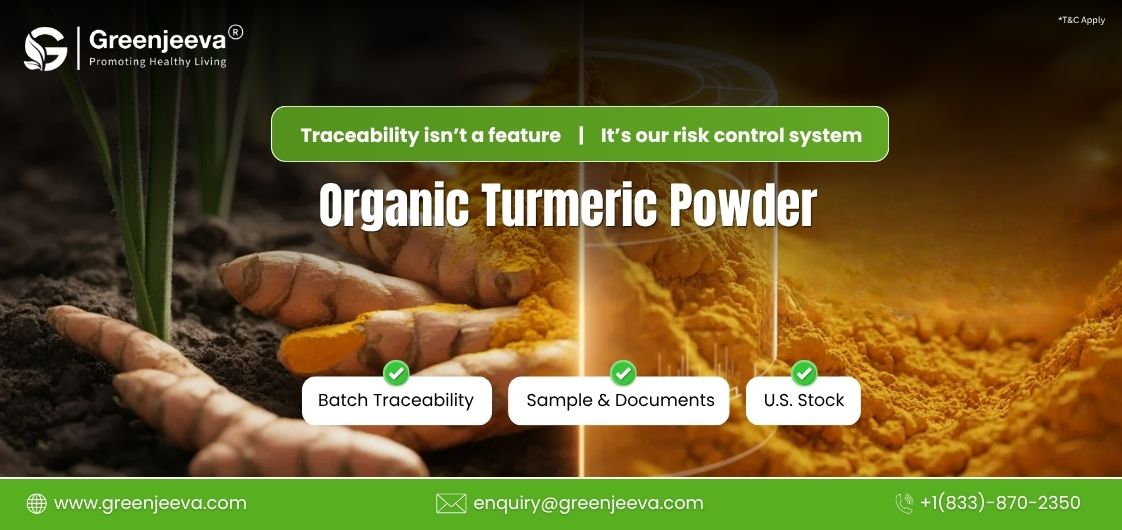
Why Traceability Drives Procurement Decisions
Traceability is often the deciding factor for buyers sourcing organic turmeric powder in the USA. It supports:
- Regulatory compliance
- Faster audits and approvals
- Greater confidence in long-term supply
Suppliers who provide structured traceability reports and clear documentation tend to integrate more smoothly into established procurement systems.
Final Thoughts
Sourcing organic turmeric powder for the US market requires a structured and disciplined approach. Compliance with FDA and USDA organic standards is essential, but it is only one part of the equation.
Supplier verification, documentation transparency, and consistent quality ultimately determine supply chain reliability. Procurement teams that prioritize these factors are better equipped to reduce risk and maintain stable operations.
Working with suppliers like Green Jeeva, who combine traceability, accessible documentation, and operational efficiency—such as same-day dispatch, regional inventory availability, and zero-question-asked return policy—can simplify sourcing while supporting long-term manufacturing goals.