Botanical Dietary Supplement Ingredients Supplier: What Brands Need to Know Before Sourcing
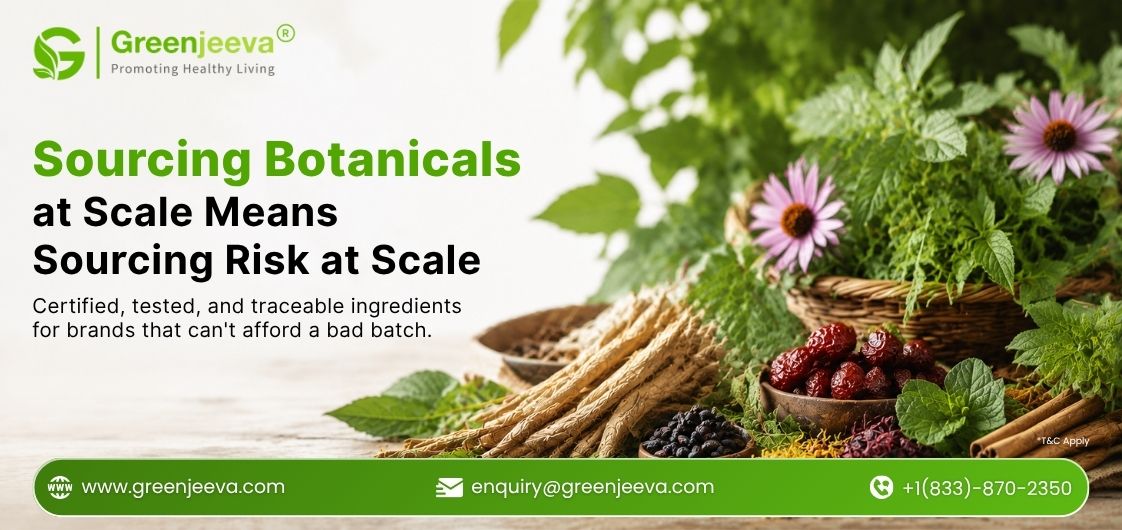
Plant-based supplement demand isn't a trend anymore it's the baseline expectation for a growing share of formulations. For brands and formulators, that shift has changed what “sourcing botanicals” actually means: it's no longer just about finding a plant that matches a claim, it's about finding a supplier who can prove where that plant came from, what's in it, and that it will perform the same way in the next batch.
This guide covers what to look for in a botanical dietary supplement ingredients supplier, how clean-label expectations are reshaping sourcing decisions, and what documentation should be standard before you place a purchase order.
Why Plant-Based Supplement Demand Keeps Growing
A few forces are driving sustained growth in plant-based nutraceutical ingredient sourcing:
• Clean-label consumer demand: shoppers increasingly check ingredient lists before checking claims, which pushes brands toward recognizable, minimally processed botanical ingredients.
• Sustainability positioning: plant-based ingredients are frequently perceived as lower-impact than synthetic alternatives, which matters to a growing share of end consumers.
• Category expansion: botanicals once limited to traditional herbal supplements now show up in functional beverages, immune-support blends, and cognitive-health formulations.
For sourcing teams, this growth means more competition for well-documented, consistent botanical supply and less tolerance for suppliers who can't back up a clean-label claim with real documentation.

What “Clean-Label” Actually Requires From a Supplier
Clean-label botanical supplement ingredients are only as credible as the sourcing behind them. Before a botanical ingredient reaches a clean-label claim on a finished product, procurement teams should confirm:
• Traceability back to the region and harvest of origin
• Third-party tested botanical extracts confirming identity, purity, and potency
• Heavy metal, pesticide residue, and microbial testing results on file
• No undisclosed carriers, fillers, or standardization agents
A supplier that can produce this documentation on request not just describe it in marketing copy is the difference between a clean-label claim that holds up and one that doesn't.
Where Adulteration Risk Actually Concentrates
Not all botanicals carry the same adulteration risk, and knowing which test catches which problem matters more than a generic “we test everything” claim:

Botanical Ingredient Regulatory Compliance: What to Verify
Botanical dietary supplements are regulated by the FDA under the Dietary Supplement Health and Education Act (DSHEA) framework, which means labeling, manufacturing, and claims all carry specific compliance requirements. When evaluating a botanical ingredient supplier for supplements, confirm:
• Current Good Manufacturing Practice (cGMP) compliance for dietary supplement ingredients
• Certificates of Analysis (COA) issued per batch, not per product line
• Country-of-origin documentation and any applicable import compliance records
• Organic, Non-GMO, Kosher, or Halal certifications where relevant to your target market
Choosing a Wholesale Botanical Extract Supplier: The Checklist
Whether you're sourcing whole-herb powders or standardized extracts, the same core evaluation criteria apply:
• Batch-specific COA confirming identity, purity, and any standardized actives
• Consistent supply across seasons, not just a single favorable harvest
• MOQ flexibility that supports both R&D trial runs and full production orders
• Private label and custom blending support for brands building their own SKU
• Responsive documentation a supplier who can produce testing records quickly is a stronger long-term partner than one who can only describe them
Potency Benchmark Reference Table
A quick reference for what “standardized” should actually mean on a vendor's spec sheet useful to have on hand when comparing quotes:

These are common industry ranges, not universal standards always confirm the exact figure against the actual COA rather than assuming a “standardized” claim matches one of these numbers by default.
For a closer look at how these evaluation criteria play out with a specific botanical ingredient including raw material sourcing, processing controls, and documentation readiness see our related guide: The Hidden Variables That Impact Lion's Mane Powder Quality, Consistency, and Supply Reliability.
Popular Botanical Ingredients Brands Are Sourcing in Bulk
Demand spans a wide range of botanical categories, from traditional adaptogens to newer additions to the clean-label formulator's toolkit. For a look at specific botanicals worth stocking at scale, see our guide: Top 5 Herbal and Botanical Supplements to Consider Buying in Bulk.
Working With Green Jeeva as Your Botanical Ingredient Supplier
As a botanical dietary supplement ingredients supplier, we provide batch-specific COAs, third-party tested botanical extracts, and documentation support for both bulk and private label programs. Whether you need wholesale plant-based ingredient pricing for an existing formulation or sourcing support for a new product line, our team can confirm current availability, certifications, and MOQ for your project.
Ready to source your next botanical ingredient? Register for free and get pricing, complementary sample, or a compliance-ready docs.
Disclaimer: The Food and Drug Administration has not evaluated these statements. This product is not intended to diagnose, treat, cure, or prevent any disease.