
Bulk Magnesium Glycinate Powder vs Other Magnesium Formats: A Practical Guide for Manufacturers
Magnesium is now one of the most widely used minerals across nutraceutical, functional food, and wellness formulations. According to market data, magnesium-based ingredients continue to see steady demand growth, driven by expanding product categories and evolving formulation needs.
But for manufacturers, the real challenge isn’t whether to use magnesium; it’s which format to choose.
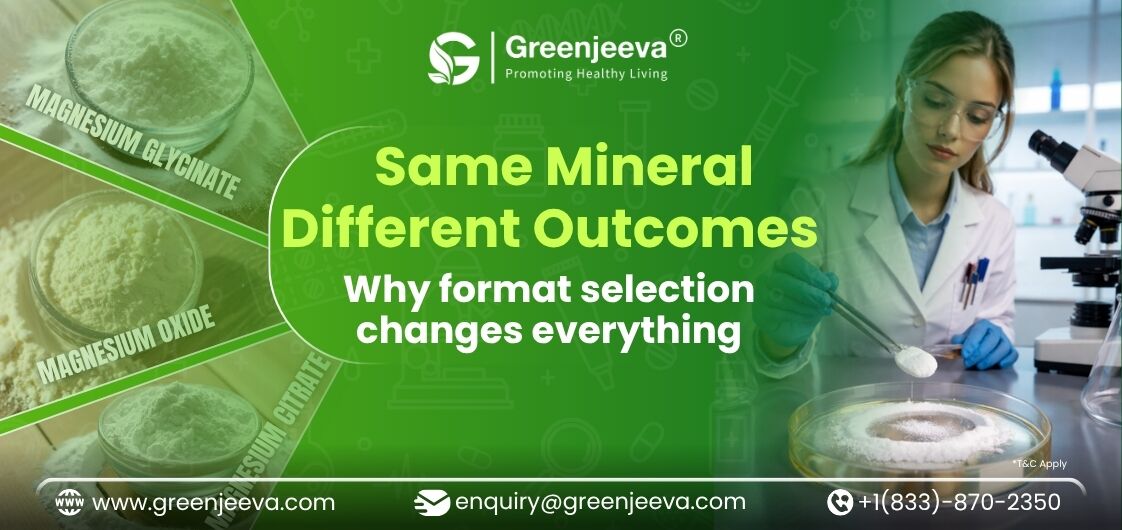
Different magnesium forms behave very differently in formulations. They vary in solubility, stability, sensory impact, and how smoothly they pass internal QA and regulatory checks. What looks similar on a spec sheet can create very different outcomes during product development.
This is where Bulk Magnesium Glycinate Powder is gaining attention among formulation and sourcing teams. Compared to conventional formats, it offers a different balance of usability and consistency.
This guide breaks down how Magnesium Glycinate Powdercompares with other commonly used formats—from both a formulation and bulk sourcing perspective.
What Is Magnesium Glycinate Powder?
Magnesium glycinate is a chelated form of magnesium, where magnesium is bound to the amino acid glycine. This structure gives it distinct functional characteristics compared to inorganic salts.
In manufacturing environments, Magnesium Glycinate Powder is typically recognized for:
- Stable structure in dry blends
- Lower interaction with other ingredients
- Relatively neutral sensory profile
Because of these properties, Magnesium Glycinateis widely used across capsules, tablets, and powder-based formulations where consistency matters.
Common Magnesium Formats Used in Manufacturing
Before comparing, it’s important to understand the most commonly used formats:
Magnesium Glycinate Powder
A chelated form combining magnesium with glycine, often used in applications where formulation stability and compatibility are priorities.
Magnesium Citrate Powder
An organic salt of magnesium with citric acid, commonly used in powders and liquid applications due to its solubility.
Magnesium Oxide Powder
An inorganic form with high elemental magnesium content, often selected for cost efficiency and compact formulations.
Magnesium Malate Powder / Other Forms
Includes combinations with malic acid or other compounds, typically used for specific formulation goals or positioning.
Each of these formats serves a purpose—but their performance varies depending on the application.
Magnesium Glycinate Powder vs Other Formats: Key Differences That Impact Formulation
Absorption & Bioavailability Considerations
Chelated forms like magnesium glycinate are often selected in formulations where mineral delivery efficiency is a consideration. In contrast, some inorganic forms may require higher inclusion levels to meet formulation targets.
From a formulation standpoint, this affects dosage size, capsule count, and overall product design.
Solubility & Dispersibility in Formulations
Magnesium citrate is generally more water-soluble, making it suitable for drink mixes and liquid formats.
Magnesium Glycinate Powder, while less soluble than citrate, tends to perform well in dry blends, capsules, and tablets where full dissolution is not required.
Taste & Sensory Impact
Sensory profile plays a bigger role than often expected.
- Magnesium citrate can introduce a slightly tart or acidic taste
- Magnesium oxide may create a chalky mouthfeel
- Magnesium glycinate is typically considered more neutral
This becomes particularly relevant in flavored powders or stick packs.
Elemental Magnesium Content vs Usability
Magnesium oxide offers a high percentage of elemental magnesium, which can look attractive on paper.
However, higher elemental content doesn’t always translate into better formulation efficiency. In some cases, it can create challenges in dispersion, compressibility, or blend uniformity.
Manufacturers often weigh elemental concentration vs functional usability during selection.
Stability & Compatibility in Blends
Ingredient interaction is a common issue in multi-ingredient formulations.
Chelated forms like glycinate are generally more stable in complex blends, reducing the likelihood of unwanted reactions with other actives, excipients, or flavors.
This is one reason Bulk Magnesium Glycinate Powder is frequently considered in formulations with multiple functional ingredients.

Why Many Manufacturers Prefer Bulk Magnesium Glycinate Powder
When formulation teams evaluate magnesium formats beyond basic specs, a few practical factors stand out.
Bulk Magnesium Glycinate Powder is often preferred because it supports:
- More consistent batch performance
- Better compatibility in multi-ingredient systems
- Fewer formulation adjustments during scale-up
For procurement teams, this translates into fewer disruptions between R&D and commercial production.
Additionally, Magnesium Glycinate Powder wholesale sourcing aligns well with products that prioritize clean labeling, predictable performance, and streamlined approvals.
Bulk Sourcing Considerations: What Buyers Should Evaluate
Choosing the right format is only part of the decision. Supplier evaluation plays an equally critical role.
When working with a Bulk Magnesium Glycinate Powder supplier, teams typically assess:
Particle Size & Flowability
Uniform particle size improves mixing, compression, and overall processing efficiency. Variability here can affect both production speed and product quality.
Batch Consistency
Consistency across batches is critical for maintaining product performance. Reviewing multiple batch COAs helps identify variations in:
- Assay values
- Moisture content
- Physical characteristics
Documentation & Compliance
Reliable suppliers provide:
- Certificates of Analysis (COA)
- Heavy metal reports
- Regulatory documentation aligned with target markets
For US-focused businesses, working with a Magnesium Glycinate Powder supplier in USA or one aligned with US regulatory expectations can simplify approvals and audits.
Supply Reliability & Traceability
Interruptions in raw material supply can delay production timelines. Traceable sourcing and stable supply chains reduce this risk.
A trusted Bulk Magnesium Glycinate Powder supplier ensures continuity, especially for high-volume or repeat production cycles.

Choosing the Right Magnesium Format for Your Application
There is no single “best” magnesium format—it depends on the application.
- Capsules & Tablets: Magnesium glycinate and oxide are commonly used, depending on formulation priorities
- Powder Blends: Glycinate and citrate are often evaluated based on dispersibility and taste
- Functional Beverages: Citrate is typically preferred for solubility
The decision usually comes down to balancing:
- Functional performance
- Sensory impact
- Processing efficiency
- Cost considerations
In many cases, manufacturers shortlist formats during early R&D and finalize based on pilot trials.
Final Thoughts
Magnesium format selection has a direct impact on formulation performance, production efficiency, and product consistency.
While different formats serve different purposes, Bulk Magnesium Glycinate Powder continues to stand out in applications where stability, compatibility, and predictable performance are priorities.
For manufacturers targeting long-term scalability, the focus should not just be on specifications—but on how the ingredient performs across batches, processes, and product formats.
Working with a reliable Magnesium Glycinate Powder supplier in USA or a globally aligned sourcing partner can further streamline procurement, documentation, and quality assurance.
In the end, the right choice is the one that supports smoother development, fewer formulation challenges, and consistent product output at scale.
**The Food and Drug Administration has not evaluated these statements. This product is not intended to diagnose, treat, cure, or prevent any disease.**