
Bulk Organic Oat Bran Ground vs. Oat Bran Powder: Choosing the Right Ingredient for Commercial Food Manufacturing
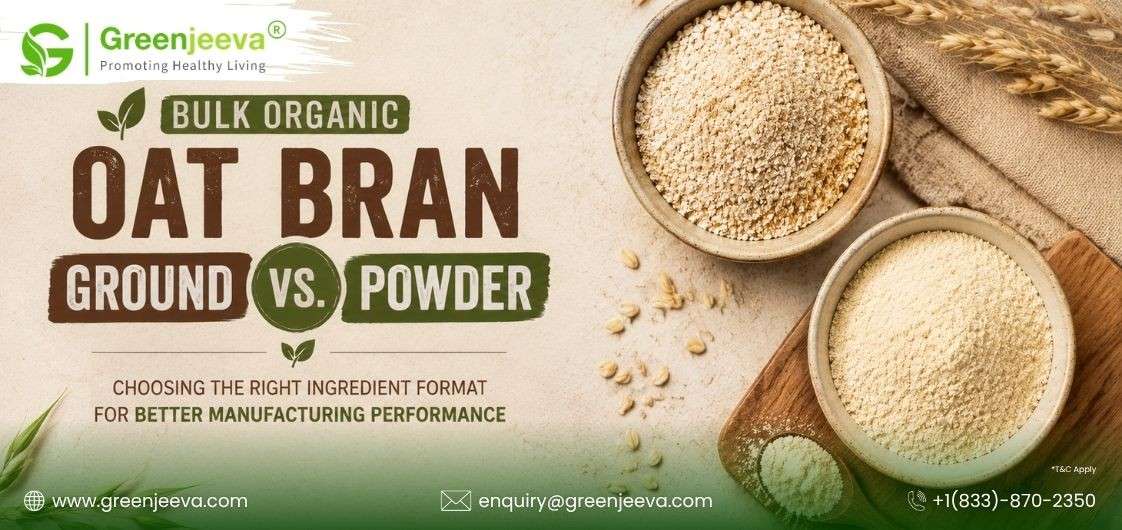
As demand for clean-label, fiber-rich ingredients continues to grow, organic oat bran has become an important ingredient across bakery, breakfast cereals, nutrition products, snacks, and functional food formulations. However, selecting the right ingredient involves more than choosing a certified organic supplier. The physical format ground oat bran or oat bran powder can influence processing efficiency, texture, blending performance, and overall manufacturing consistency.
For procurement teams and product developers, understanding these differences is essential before placing a bulk order. This guide compares Bulk Organic Oat Bran Ground with COA in USA against oat bran powder, helping commercial buyers evaluate which format best suits their formulation, production process, and sourcing requirements.
Why Bulk Organic Oat Bran Ground Is Becoming a Preferred Ingredient for Food Manufacturers
Food manufacturers are increasingly selecting Bulk Organic Oat Bran Ground for applications where balanced texture, controlled water absorption, and consistent blending are essential. Unlike finely milled powders, the ground format retains a slightly coarser particle size, making it suitable for products that benefit from improved mouthfeel and visual grain identity.
Commercial manufacturers commonly use organic oat bran ground in:
- Breakfast cereals
- Granola and muesli
- Bakery products
- Nutrition and protein bars
- Functional snack formulations
- Fiber-enriched dry mixes
Beyond functionality, buyers also prioritize suppliers that provide Certificates of Analysis (COA), organic certification, batch traceability, and consistent product specifications to support quality assurance and regulatory compliance.
Bulk Organic Oat Bran Ground vs. Oat Bran Powder: Key Manufacturing Differences
Selecting between oat bran ground and oat bran powder depends on how the ingredient is expected to perform during manufacturing not simply on particle size.

Procurement Insight
Neither format is universally better. Organic Oat Bran Ground is often preferred for dry food applications requiring texture, consistent handling, and lower dust generation, while Oat Bran Powder may be a better option for formulations requiring smooth dispersion, such as beverage mixes or finely textured products. The right choice depends on the intended application and manufacturing process.
Commercial Applications of Organic Oat Bran
Organic oat bran is widely incorporated into commercial food formulations to increase fiber content while supporting clean-label product development.
Common applications include:
- Bakery mixes and breads
- Breakfast cereals and granola
- Nutrition bars
- High-fiber snacks
- Functional food products
- Dry meal mixes
- Plant-based formulations
- Health-focused cereals
Its versatility allows manufacturers to improve texture and nutritional positioning while maintaining formulation flexibility across multiple product categories.
Formulation Intelligence: How Ingredient Format Influences Product Performance
Selecting the appropriate oat bran format can significantly influence manufacturing outcomes.
Ground oat bran generally provides better flow characteristics, improved handling during dry blending, and a more defined grain texture in finished products. These properties are particularly valuable in bakery mixes, cereals, and granola, where ingredient identity contributes to the final consumer experience.
Conversely, oat bran powder disperses more readily into liquid systems and formulations requiring a smooth texture. While this can benefit beverage applications, the finer particle size may generate more dust during handling and require additional controls in some production environments.
For product developers, evaluating ingredient performance through pilot trials is often the most reliable way to determine which format aligns with production goals.
Quality & Buyer Intelligence: What to Evaluate Before Purchasing Bulk Organic Oat Bran Ground
For commercial buyers, selecting an organic oat bran supplier extends beyond pricing and availability. Ingredient consistency, documentation, and supply reliability can directly influence production efficiency and product quality.
Before placing a bulk order, evaluate the following:
- Certificate of Analysis (COA):Verify batch-specific specifications, including moisture, microbiological parameters, and physical characteristics.
- Organic Certification: Confirm compliance with recognized organic standards applicable to your target market.
- Particle Size Consistency: Consistent particle size supports predictable blending and manufacturing performance.
- Batch Traceability: Ensure the supplier maintains traceable production records for quality assurance and regulatory compliance.
- Packaging & Storage: Appropriate packaging helps preserve product integrity during transportation and storage.
- Supply Continuity: Assess the supplier's ability to support ongoing production with consistent quality and reliable inventory.

Procurement Insight
A supplier that consistently delivers documented quality and reliable supply often contributes more to long-term manufacturing efficiency than one offering only the lowest purchase price.
Commercial Intelligence: Looking Beyond Ingredient Price
When sourcing bulk ingredients, the lowest quoted price doesn't always translate into the lowest manufacturing cost.
A reliable ingredient format can help reduce:
- Material waste during handling
- Dust-related product loss
- Production interruptions
- Batch-to-batch variability
- Rework caused by inconsistent performance
For manufacturers producing at commercial scale, these operational efficiencies often have a greater impact on total cost than small differences in ingredient pricing.
Commercial Insight
The true value of an ingredient lies in how consistently it performs throughout production not simply in its cost per kilogram.
Conclusion
Selecting the right oat bran format is an important commercial decision that influences formulation performance, production efficiency, and long-term product consistency. While Organic Oat Bran Ground is often preferred for bakery products, cereals, and dry blends requiring texture and excellent handling characteristics, Oat Bran Powder may be more suitable for applications that demand finer dispersion.
By evaluating ingredient functionality alongside documentation, batch consistency, and supplier reliability, manufacturers can make more informed sourcing decisions that support both product quality and operational efficiency.
Whether you're sourcing for product development or commercial-scale production, understanding how ingredient format impacts manufacturing is just as important as choosing the right supplier.