
How to Verify the Quality & Authenticity of Organic Ginger Root Powder for Bulk Sourcing
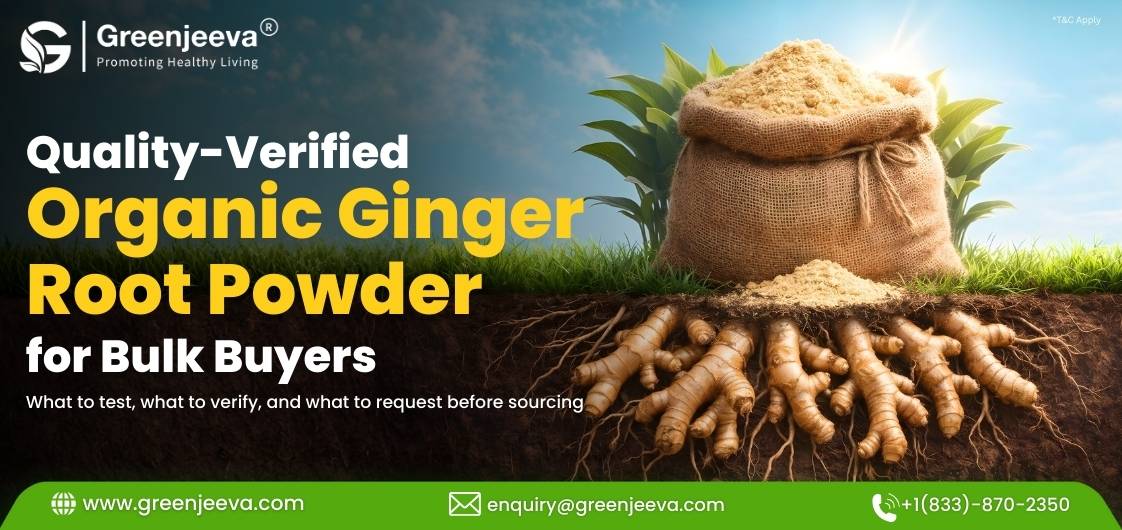
Bulk buyers of organic ginger root powder— including nutraceutical manufacturers, functional food brands, and ingredient distributors — face a critical sourcing challenge: verifying quality, authenticity, and organic compliance before committing to large-volume contracts.
Unlike small retail purchases, bulk sourcing errors can surface later during formulation trials, microbial testing, audits, or regulatory inspections. This makes supplier verification not just a quality step, but arisk management strategy.
This guide outlines a practical, buyer-focused framework to evaluate organic ginger root powder, supplier credibility, and required documentation — helping procurement and QA teams reduce sourcing risk while maintaining batch-to-batch consistency at scale.
Why Quality Verification Is Critical for Bulk Ginger Root Powder Buyers
When sourcing ginger root powder in bulk, quality problems rarely appear immediately. They often emergelater through:
Stability testing failures
Microbial or heavy metal non-compliance
Inconsistent sensory performance
Audit documentation gaps
Verifying quality upfront helps buyers:
Avoid adulterated or exhausted ginger material
Ensure compliance with USDA Organic (NOP) or Canada Organic Regime (COR)
Maintain consistency across multiple shipments
Protect brand reputation and downstream customers
This is especially important for importers and private-label brands sourcing from international supply chains.
Common Quality Risks in Bulk Organic Ginger Root Powder
Adulteration & Authenticity Concerns
Low-grade or compromised ginger powder may include:
Exhausted (spent) ginger after extraction
Blends with other rhizomes
Excess fiberor starch fillers
These issues typically lead to weak aroma, reduced flavor impact, and inconsistent performance in finished applications.
Impact on Formulations, Audits & Customer Trust
Substandard quality can result in:
Flavor variation in food and beverage formulations
Failed microbial or contaminant tests
Non-compliance during FDA or CFIA inspections
Loss of buyer confidence during repeat orders
Visual & Sensory Checks for Authentic Ginger Root Powder
While laboratory testing is essential, experienced buyers often begin with sensory screening.
Expected Characteristics of High-Quality Organic Ginger Root Powder
Color:Light beige to pale yellow
Aroma:Sharp, warm, spicy — distinctly ginger
Taste:Characteristic pungent ginger profile
Texture:Fine, uniform powder with minimal clumping
Red Flags to Watch For
Grey or dark brown color
Weak, musty, or earth yodor
Visible coarse particles or excess moisture
Note:Sensory checks are only a preliminary tool and should always be supported by laboratory testing for safety, identity, and compliance verification.
Laboratory Tests Used to Verify Ginger Root Powder Quality & Authenticity
Botanical Identification & Authenticity Testing
To confirm the botanical source Zingiber officinale, suppliers may conduct:
Macroscopic and microscopic examination
DNA barcoding (in higher-risk supply chains)
These methods help ensure the powder is genuine ginger root rather than a substitute material.
Physical & Chemical Quality Parameters
Professional bulk buyers typically expect ginger root powder specifications such as:

These parameters reflect processing hygiene, raw material quality, and identity strength.
Microbial & Contaminant Screening
Bulk ginger root powder intended for USA and Canada markets should be tested for:
Microbiology
Total plate count (e.g., NMT 100,000cfu/g)
Yeast &mold(e.g., NMT 1,000cfu/g)
Pathogens:Salmonella,E. coli,Staphylococcus aureus(Negative)
Coliform limits (e.g., NMT 100cfu/g)
Heavy Metals(USP <232>/<233>)
Lead (NMT 0.5 ppm)
Arsenic (NMT 0.5 ppm)
Cadmium (NMT 0.5 ppm)
Mercury (NMT 0.1 ppm)
Total heavy metals (e.g., NMT 10 ppm)
Pesticide Residues
Must comply with USP <561>and organic standards for certified material
These tests are critical for regulatory clearance and importer compliance.
Documentation Buyers Should Request from Ginger Root Powder Suppliers
Certificate of Analysis (COA)
Each lot should be supported by alot-specific COA that includes:
Botanical name (Zingiber officinale)
Batch or lot number
Test parameters and methods (USP, HPLC, etc.)
Manufacturing and analysis dates
Specification Sheet & Safety Documents
These define:
Physical and chemical specifications
Shelf life and storage conditions
Handling and safety information
Organic Certification & Traceability Records
Buyers should verify:
USDA Organic or COR certification
Valid scope certificates covering processing and packing
Lot-wise traceability back to origin
Suppliers experienced in bulk exports typically maintain retained samples and full batch documentation as part of their quality systems.
Verifying Organic Status & Supply Chain Transparency
USDA vs Canada Organic Requirements
USA buyers:USDA Organic (NOP compliant)
Canada buyers:Canada Organic Regime (COR)
Certificates should be:
Issued by accredited certifying bodies
Current and valid
Aligned with the destination market
Batch Traceability & Consistency Controls
Reliable suppliers maintain:
Lot-wise production records
Retained samples
Change control documentation for raw material sourcing
This level of traceability helps ensure long-term consistency across repeat orders.
Quality Expectations by Application Type
Nutraceutical & Dietary Supplement Use
Typically requires:
Tight microbial limits
Strong identity verification (botanical + marker compounds)
Consistent particle size
Functional Food & Beverage Applications
Buyers often focus more on:
Flavor strength and uniformity
Color consistency
Powder flow and dispersion characteristics
Manufacturer vs Trader: Understanding Quality Control Differences
Manufacturers with in-house processing and QA systems often provide:

Direct control over raw material sourcing
Standardized SOP-driven processing
In-house or coordinated third-party testing
Better lot-to-lot consistency for long-term contracts
This level of control can be especially valuable for buyers requiring stable supply across multiple shipments.
Key Questions Bulk Buyers Should Ask Before Finalizing a Supplier
How frequentlyis each batch tested?
Are accredited third-party labs used?
Can pre-shipment samples be provided?
Is there a retained sample policy?
How is consistency maintained across repeat orders?
These questions help distinguish quality-focused suppliers from purely transactional sellers.
Ensuring Long-Term Quality Consistency in Bulk Ginger Root Powder Supply
Aligning on Quality Expectations
Buyers and suppliers should establish:
Written specifications
Agreed testing parameters
Change notification protocols
Signs of a Reliable Long-Term Supplier
Transparent documentation
Responsive QA communication
Export experience to the USA and Canada
Stable, quality-linked pricing
Suppliers tha toperatewith structured QA systems and export-focused compliance processes are generally better positioned to support long-term bulk sourcing programs.
Conclusion
Verifying the quality and authenticity of organic ginger root powder is not a one-time checklist — it is a strategic sourcing decision that directly affects formulation performance, regulatory compliance, and supply reliability.
For bulk buyers, the most dependable approach combines:
Sensory evaluation for early screening
Laboratory testing for identity, purity, and safety
Clear documentation including COAs, specifications, and organic certificates
Strong supplier traceability and batch-level consistency
Bulk suppliers that can demon strate transparent QA systems, export-ready testing, and lot-specific documentation are significantly better positioned to support repeat orders and long-term contracts.
Green Jeeva supports bulk buyers looking to source organic ginger root powder with traceable sourcing, lot-specific documentation, and export-compliant testing, helping procurement and QA teams reduce sourcing risk while maintaining consistent quality across shipments.
Next step:
Register for free and download lot-specific COAs, review organic certification scope, and approve pre-shipment samples before committing to bulk volumes. Early due diligence leads to smoother imports and more reliable long-term partnerships.
**The Food and Drug Administration has not evaluated these statements. This product is not intended to diagnose, treat, cure, or prevent any disease.**