
How to Evaluate a Bulk Organic Bamboo Extract Powder Supplier: A Procurement Playbook for Commercial Buyers
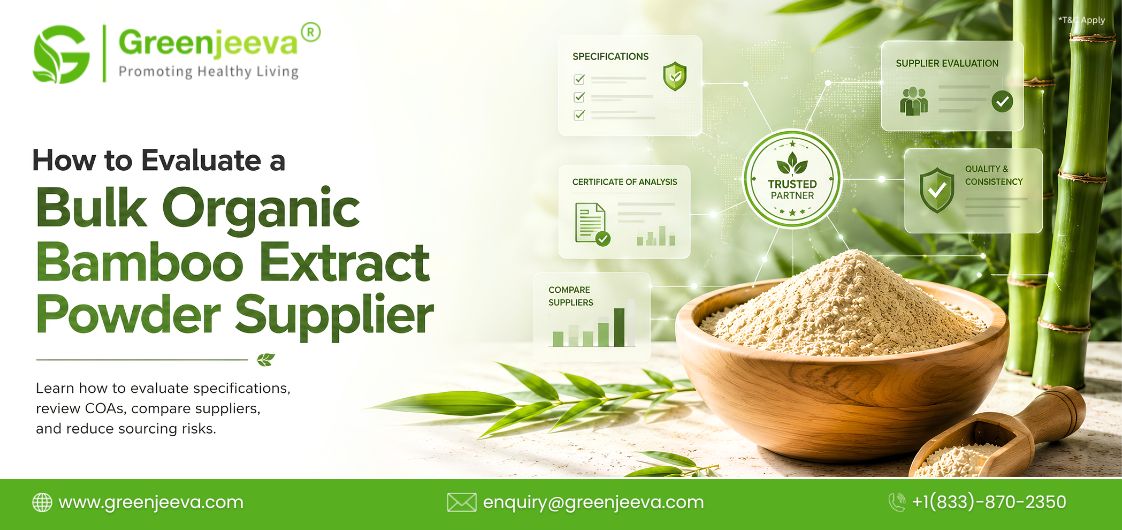
Choosing a bulk organic bamboo extract powder supplier isn't simply a purchasing decision; it's a risk management exercise. While suppliers may offer similar pricing and claim identical silica concentrations, differences in botanical sourcing, product standardization, documentation, and manufacturing consistency can have a significant impact on supplier qualification and commercial production.
For procurement teams, the real challenge isn't finding a supplier offering bamboo extract; it's identifying one capable of delivering consistent quality, complete technical documentation, and reliable long-term supply.
This procurement playbook outlines seven evaluation checkpoints that can help buyers compare suppliers more effectively, reduce sourcing risks, and make informed purchasing decisions before placing a commercial order.
Who Should Read This Guide?
This guide is intended for:
• Procurement Managers
• Category Buyers
• Product Development Teams
• QA & QC Professionals
• Regulatory Affairs Teams
• Contract Manufacturers
• Nutraceutical, Functional Food, and Personal Care Brands
Verify the Botanical Identity of Bulk Bamboo Extract Powder Before Comparing Suppliers
Many procurement teams request quotations from multiple suppliers and immediately compare pricing. However, this approach assumes that every quotation represents the same raw material, which is not always the case.
"Bamboo Extract Powder" is a broad product category. Suppliers may offer extracts derived from bamboo stems or bamboo shoots, each with different characteristics, processing methods, and commercial applications. Products can also vary in silica standardization, extraction methods, organic certification, and quality specifications.
Before comparing prices, procurement teams should verify that each supplier is offering an equivalent specification. Evaluating unlike products based solely on cost can lead to inaccurate supplier comparisons and unnecessary delays during qualification.

A lower quotation is only meaningful when every supplier is quoting the same specification.
How to Evaluate Organic Bamboo Extract Powder 70% Silica Beyond the Specification Sheet
A standardized silica concentration is one of the first specifications buyers compare. However, experienced procurement professionals understand that the percentage alone doesn't tell the complete story.
Two suppliers may both offer Organic Bamboo Extract Powder 70% Silica, yet differ significantly in analytical testing, process controls, and documentation practices. These differences often become apparent during supplier qualification rather than at the quotation stage.
Instead of focusing only on silica content, procurement teams should evaluate the supporting technical information that demonstrates how the specification is achieved and maintained.
Ask Your Supplier
•Is the silica content standardized for every production batch?
• Which analytical method is used to verify the silica specification?
• Is a batch-specific Certificate of Analysis provided?
• Does the extract contain any carriers or additives?
• Are historical batch records available upon request?
When comparing suppliers offering similar silica specifications, review the supporting technical documentation before comparing commercial terms. Consistent process controls and transparent documentation often indicate a more reliable long-term supply partner.

How to Review a Bamboo Extract COA Before Choosing a Bulk Supplier
A Certificate of Analysis (COA) is more than a quality document it's one of the most valuable tools for evaluating a bulk bamboo extract powder supplier. Rather than requesting a COA simply to complete supplier qualification, procurement teams should use it to verify whether a supplier can consistently deliver the specification required for commercial production.
An incomplete or inconsistent COA may indicate gaps in process control, testing practices, or documentation management. Reviewing these details early can help reduce qualification delays and minimize the risk of sourcing unsuitable raw materials.

A well-documented COA demonstrates more than product quality, it reflects the supplier's commitment to traceability, quality management, and consistent manufacturing practices.
How to Compare Bulk Bamboo Extract Suppliers Beyond Price
Price is one component of supplier selection, but it should never be the only decision criterion. A lower purchase price can quickly lose its advantage if it results in extended qualification timelines, inconsistent batches, additional testing, or production delays.
Instead, procurement teams should evaluate suppliers using a balanced scorecard that considers technical capability, documentation, commercial reliability, and long-term partnership potential.
Supplier Evaluation Scorecard
Evaluation Criteria | Why It Matters |
Organic Certification | Supports clean-label and certified product claims. |
Batch-Specific COA | Confirms every shipment meets the agreed specification. |
Traceability Documentation | Simplifies audits and regulatory compliance. |
Standardized Manufacturing Process | Improves batch-to-batch consistency. |
Technical Support | Helps resolve formulation and qualification questions quickly. |
Supply Continuity | Reduces the risk of production interruptions. |
Packaging Options | Supports operational and logistics requirements. |
Documentation Response Time | Accelerates supplier onboarding and customer approvals. |
The most valuable supplier is often the one that reduces operational risk not simply the one offering the lowest quotation.
Understanding the Hidden Cost of Low-Cost Bamboo Extract Powder
A competitive quotation may appear attractive during sourcing, but the true cost of an ingredient is measured across the entire supply chain not just the purchase order.
If a raw material fails incoming quality checks or lacks complete documentation, procurement teams may face additional laboratory testing, supplier follow-ups, delayed production schedules, and higher operational costs. In some cases, reformulation or supplier replacement may be required after qualification has already begun.
Total Cost of Ownership (TCO): Think Beyond Purchase Price
Potential Issue | Commercial Impact |
Batch Fails QC | Additional testing and delayed release |
Missing Documentation | Slower supplier qualification |
Inconsistent Specifications | Reformulation and production adjustments |
Supply Interruptions | Manufacturing downtime |
Variable Product Quality | Customer complaints and increased quality costs |
When evaluating suppliers, consider the Total Cost of Ownership (TCO) rather than the initial purchase price. A supplier with consistent quality systems, complete documentation, and reliable supply often delivers greater long-term value than one offering the lowest unit cost.
Bamboo Stem Extract vs. Bamboo Shoot Extract: Which Is Right for Your Commercial Application?
Not all bamboo-derived ingredients are developed for the same end use. Understanding the differences between bamboo stem extract and bamboo shoot extract powder can help procurement and product development teams select the most suitable ingredient for their formulation goals.
While the final selection depends on the supplier's product specification and intended application, comparing the source material early in the sourcing process helps avoid unnecessary reformulation or supplier changes later.

Rather than choosing an ingredient based on its name alone, evaluate whether its specification, plant part, and documentation align with your product requirements and regulatory expectations.
Bulk Bamboo Extract Supplier Checklist for Procurement Teams
Before approving a bulk bamboo extract supplier, use the following checklist to ensure the product and supplier meet your technical and commercial requirements.
Procurement Checklist
• Botanical identity verified
• Correct plant part confirmed
• Standardized silica specification reviewed
• Batch-specific COA available
• Heavy metals and microbiological limits verified
• Organic certification validated
• Traceability documentation available
• Packaging meets operational requirements
• Supply continuity discussed
• Technical documentation available for qualification
• Responsive technical and commercial support
Completing this checklist before issuing a purchase order can reduce qualification delays, improve supplier comparisons, and support more consistent procurement decisions.
Conclusion
Selecting a bulk organic bamboo extract powder supplier requires more than comparing prices or reviewing a specification sheet. Successful procurement decisions are built on a thorough evaluation of botanical identity, standardized specifications, technical documentation, manufacturing consistency, and long-term supply capability.
By reviewing Certificates of Analysis carefully, comparing suppliers beyond price, understanding the total cost of ownership, and matching ingredient specifications to your application, procurement teams can reduce sourcing risks while building stronger supplier partnerships.
Whether you're qualifying a new supplier or expanding your ingredient portfolio, following a structured evaluation process helps ensure every sourcing decision supports product quality, operational efficiency, and long-term commercial success.