
Plant-Based Nutrition for Athletes: Protein, Recovery and Caffeine Anhydrous Sourcing Guide
Yes, a well-planned plant-based diet can fuel athletic performance. Whole plant proteins, complex carbohydrates and caffeine anhydrous together support energy, muscle recovery and endurance when intake is dosed correctly. This guide, reviewed by Green Jeeva's QA/RA team, explains the science, the sourcing considerations and the exact numbers athletes and formulators need.
Why Athletes Are Turning to Plant-Based Nutrition
Athletes choose plant-based nutrition for three proven reasons: antioxidant-rich foods speed recovery, complex carbohydrates provide long lasting energy, and plant proteins meet muscle repair needs without the saturated fat load of many animal sources. A growing share of teams and individual athletes also cite sustainability as a deciding factor in how they fuel training.

Better Recovery Through Antioxidants
Plant-based foods are dense in vitamins, minerals and antioxidants that help reduce oxidative stress from intense training. Berries, leafy greens and colorful vegetables are commonly used to support faster recovery between sessions.
Sustained Energy from Complex Carbohydrates
Quinoa, oats and sweet potatoes supply slow-release carbohydrates that keep energy levels steady through long training blocks, rather than the sharp spike and crash associated with simple sugars.
Environmental and Sustainability Considerations
Many athletes and the brands that sponsor them are factoring environmental footprint into ingredient choices, which is one reason sustainable sports nutrition sourcing has become a genuine purchasing criterion rather than a marketing label.
Meeting Protein and Recovery Needs on a Plant-Based Diet
Yes, athletes can meet full protein needs on a plant-based diet. Combining legumes, tofu, tempeh and plant protein powders across meals supplies all essential amino acids, and the Academy of Nutrition and Dietetics confirms that appropriately planned plant-based diets support muscle repair, strength and long term athletic health.
Protein Needs and Vegan Protein Sources for Athletes
Lentils, chickpeas, soy foods and plant protein powders are the core vegan protein sources for athletes. Spreading intake across the day, rather than loading it into one meal, is the simplest way to hit daily targets.
Iron, Calcium and Other Key Micronutrients
Spinach, fortified plant-based milk and kale help cover iron and calcium needs, both of which support muscle function and bone health under heavy training loads.
Omega-3 Fatty Acids and Vitamin B12
Flaxseeds, chia seeds and walnuts provide plant-based omega-3s for joint and cardiovascular health. Vitamin B12 does not occur naturally in plant foods, so fortified cereals, nutritional yeast or a supplement are necessary for plant-based athletes.
Caffeine Anhydrous: What It Is and How It Supports Performance
Caffeine anhydrous is a dehydrated, concentrated caffeine powder extracted from coffee beans or tea leaves. Because it contains no water weight, it delivers a precise, fast absorbing dose and is a standard pre-workout ingredient used to support focus, delay fatigue and preserve glycogen stores during training.
How Caffeine Anhydrous Supports Endurance and Focus
Caffeine anhydrous helps delay the onset of fatigue and supports sustained focus during long or high-intensity sessions. It also encourages the body to draw on fat stores for fuel, which helps preserve glycogen for later in a workout. The International Society of Sports Nutrition's position stand on caffeine and exercise performance notes that caffeine use is common across competitive sport and that anhydrous forms produce a stronger ergogenic effect than an equivalent dose of coffee.
Practical Dosing Guidance for Athletes
Sports nutrition research, including guidance summarized by the NIH Office of Dietary Supplements, supports doses of roughly 3 to 6 milligrams per kilogram of body weight, taken 30 to 60 minutes before a workout. Athletes new to caffeine anhydrous should start at the lower end of that range, pair it with a carbohydrate-rich snack, and avoid taking it late in the day to protect sleep and recovery.
Sourcing Plant-Based Protein and Caffeine Anhydrous in Bulk
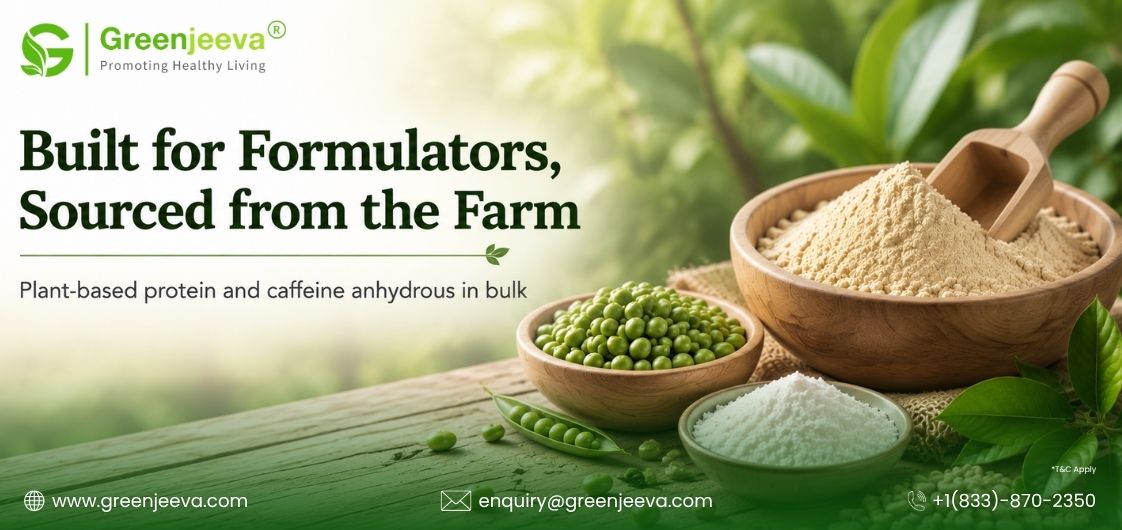
Formulators and brands sourcing plant-based protein or caffeine anhydrous in bulk should evaluate supplier traceability, third-party testing, minimum order flexibility and per-kilogram pricing before committing. Green Jeeva supplies both ingredients directly from vertically integrated farms, with documentation available on request through a free sourcing trial.

What to Check Before You Buy Caffeine Anhydrous Powder in Bulk
Before you buy caffeine anhydrous powder in bulk, confirm the supplier can provide a certificate of analysis per batch, disclose the extraction and purity process, and support the order volume you need without long lead times. Buyers comparing a caffeine anhydrous powder supplier should also ask how pricing scales, since caffeine anhydrous powder price per kg typically drops at higher order volumes.
Conclusion
A thoughtfully planned plant-based diet, paired with a well dosed ingredient like caffeine anhydrous, covers the energy, recovery and endurance needs of serious athletes. For formulators and brands, the bigger decision is sourcing: choosing a supplier that can verify traceability, testing and bulk pricing matters as much as the nutrition science itself.
Related reading: Ashwagandha Benefits, Nutrition Profile and Industrial Uses and Aronia Berries: Nutrition Chart and Interesting Facts
Ready to source wholesale plant-based protein powder or caffeine anhydrous?
Register for free