
Why Do Formulators Prefer Organic Psyllium Husk Powder for Clean-Label Innovation?
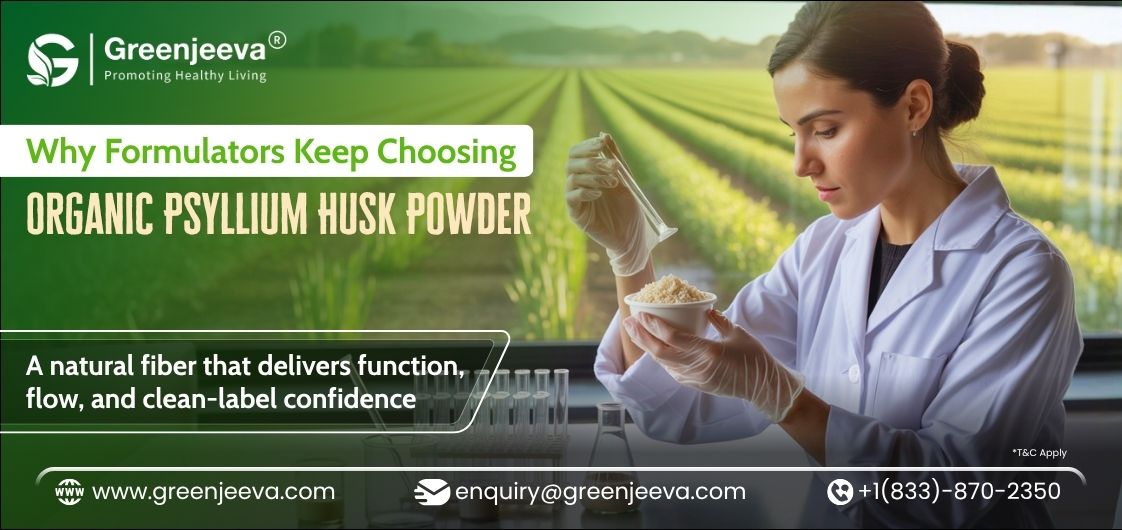
Did you know even the smallest ingredient on a label can make the biggest difference? For formulators and sourcing teams balancing texture, functionality, and compliance, Organic Psyllium Husk Powder has become a quiet hero.
It’s not new, but the way industries are using it today definitely is. From beverage stabilizers and fiber-rich nutrition blends to gentle natural thickeners in personal care formulations, psyllium’s versatility is giving manufacturers more reasons to rely on it.
As more U.S. buyers look for dependable, Non-GMO, and organic-certified bulk options,understanding its sourcing, functionality, and industrial potential is key.
Let’s take a closer look at why this natural fiber keeps earning its place in clean-label innovation and what decision-makers should know before adding it to their bulk sourcing list.
What Is Organic Psyllium Husk Powder and How Is It Processed?
Organic Psyllium Husk Powder is the finely milled outer coating of Plantago ovata seeds, produced through mechanical dehusking, drying, and milling under certified organic conditions.
Sourced mainly from organically grown Plantago ovata in India, psyllium husk powder is processed by removing the seed coat, cleaning, and milling it into uniform grades. Organic certification ensures no synthetic pesticides or fertilizers are used throughout cultivation and processing.
Producers use mechanical dehusking and warm-air drying to preserve the husk’s natural mucilage the component responsible for its high swell volume and gel-forming ability. Once milled, the powder is sieved to specific mesh sizes and packed in moisture-protective drums or bags, ready for bulk supply to manufacturers worldwide.
In certified facilities, each lot is tested for moisture, purity, microbial load, heavy metals, and pesticide residues to meet U.S. and international compliance standards. Buyers sourcing bulk Organic Psyllium Husk Powder often request COA, MSDS, and Organic Certificates before finalizing shipments.
Why Do Formulators Use Psyllium as a Functional Ingredient?
Psyllium husk powder provides hydration, thickening, binding, and texturizing properties that improve formulation efficiency and clean-label performance.
Psyllium husk’s structure is rich in soluble fiber that forms a viscous gel when hydrated. In formulations, this translates into predictable rheology and viscosity control key factors for manufacturing efficiency.
- Hydration and gel formation: The husk swells rapidly in water, creating stable gels that improve body and mouthfeel in plant-based drinks, functional foods, and meal mixes.
- Binding and cohesion: In solid applications like bakery, tablets, and extruded snacks, psyllium acts as a natural binder that supports structural integrity during drying or compression.
- Texture optimization: Formulators use it to achieve uniform crumb structure and moisture retention in gluten-free and reduced-gum recipes.
- Clean-label positioning: Because it appears on ingredient lists simply as “Organic Psyllium Husk Powder,” it helps maintain label transparency while replacing synthetic stabilizers or gums.
These properties allow manufacturers to reduce complexity in their formulations while maintaining functional stability a growing priority in clean-label product development.

Which Industries Use Organic Psyllium Husk Powder in Their Formulations?
Psyllium husk powder supports applications in functional foods, dietary supplements, beverages, personal care, and pet nutrition through its natural thickening and binding capabilities.
- Functional Foods and Bakery: R&D teams rely on psyllium for its ability to absorb water and retain moisture, improving the structure of gluten-free bakery systems. It helps stabilize dough viscosity, reduce breakage, and maintain softness without synthetic emulsifiers.
- Nutraceuticals and Dietary Supplements: Used as a filler and binder, psyllium powder provides compressibility in tablets and capsules while ensuring consistent bulk density and flow. Its organic certification supports compliance with USDA and EU organic supplement standards.
- Functional Beverages: In powdered mixes or hydration drinks, psyllium adds mild viscosity and helps stabilize suspensions. Manufacturers carefully control dosage to avoid excessive thickening.
- Personal Care and Cosmetics: Its film-forming and gelling characteristics make it a plant-derived alternative to synthetic thickeners in masks, gels, and cleansers.
- Pet and Animal Nutrition:In feed formulations, psyllium contributes to fiber content and product binding. Manufacturers incorporate it for texture stability and uniform extrusion performance.
Across these applications, Non-GMO Organic Psyllium Husk Powder supports both technical and marketing goals offering consistent functionality with clean sourcing credentials.
What Should Procurement Teams Check Before Buying in Bulk?
Buyers should verify certifications, specifications, testing reports, and packaging details when sourcing bulk Organic Psyllium Husk Powder from suppliers.
Procurement teams evaluating bulk Organic Psyllium Husk Powder suppliers often follow strict audit and documentation protocols. Before issuing a purchase order, several key points require verification:
- Certifications: Ensure USDA Organic, Non-GMO, and where applicable, Kosher/Halal certifications are valid and current.
- COA & Specifications: Review batch-specific data for moisture (≤10%), total ash (≤4%), and swell volume, alongside microbiological and heavy metal results.
- Testing: Confirm independent lab testing for contaminants such as lead, arsenic, cadmium, and mercury.
- Allergen Control: Verify allergen handling policies, as psyllium is often processed in facilities managing other botanicals.
- Packaging & MOQ: Most wholesale Organic Psyllium Husk Powder shipments are packed in 25 kg bags or drums, with MOQs ranging from 25 kg.
- Documentation: Required documents typically include COA, MSDS, Organic Certificate, and Certificate of Origin.
Working with an Organic Psyllium Husk Powder supplier in the USA or a certified global partner allows for better traceability, predictable lead times, and easier customs documentation during import.
Where Is the Market for Organic Psyllium Husk Powder Heading?
Demand for Organic Psyllium Husk Powder is rising across the U.S. as clean-label and plant-based formulations expand into new product categories.
The U.S. market continues to see steady growth in Organic Psyllium Husk Powder use, driven by product developers looking for natural thickeners and stabilizers. While India remains the dominant source, domestic repackers and importers have expanded warehouse networks to ensure faster fulfillment and regional availability.
Manufacturers increasingly specify psyllium for:

- Gluten-free formulations where structure and elasticity are difficult to achieve naturally.
- Plant-based meal systems seeking viscosity without synthetic gums.
- Hybrid food-cosmetic projects, where a single plant ingredient can serve both textural and sensory functions.
With more R&D teams focusing on multi-functional clean-label systems, psyllium’s role as a plant-derived hydrocolloidis expanding. This opens opportunities for product innovation across functional food, supplement, and personal care categories, especially when consistent bulk supply and compliance documentation are available.
Conclusion
Organic Psyllium Husk Powder sits at the intersection of performance and transparency. For manufacturers, it’s not just a fiber source; it’s a functional material that helps achieve clean-label goals without compromising texture or processing stability. Whether used in food, beverage, supplement, or personal care applications, its versatility and regulatory clarity make it a dependable choice for industrial formulators. As market demand for sustainable and label-simple ingredients continues to rise, the need for reliable, certified bulk supply becomes even more critical.
Green Jeeva provides bulk Organic Psyllium Husk Powder with complete documentation, including Organic Certificates, COAs, and testing reports.
- Clean-label, Non-GMO ingredient
- Available in multiple purity grades
- Warehouses located in the USA for consistent supply
**The Food and Drug Administration has not evaluated these statements. This product is not intended to diagnose, treat, cure, or prevent any disease.**