
How Market Trends Are Shaping Demand for Organic Peppermint Powder in the USA
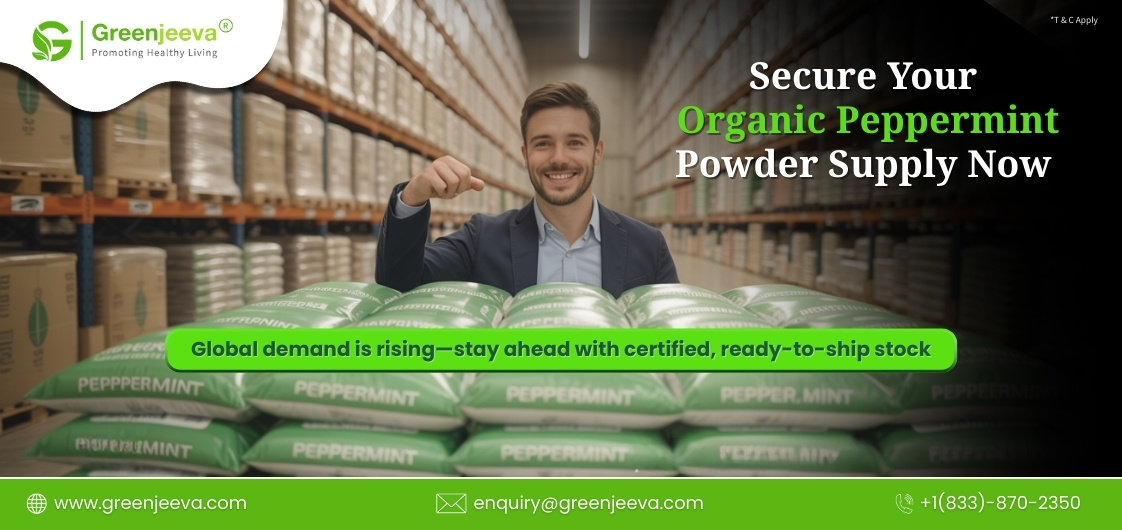
Organic Peppermint Powder is gaining steady traction with U.S. manufacturers who need clean-label ingredients that are compliant, consistent, and scalable. Procurement teams and formulators value its stable flavor profile, dry handling, and compatibility with multiple product formats.
This blog blends market context with a practical sourcing guide so teams can align buying decisions with quality, certification, and documentation standards, without slowing launch timelines.
Why is demand for Organic Peppermint Powder growing in the USA?
Demand is rising due to clean-label alignment, documented compliance, and reliable Bulk supply for year-round production with predictable wholesale pricing.
Clean-label priorities are reshaping ingredient shortlists. Brands want clean-label peppermint powder supported by audited paperwork, consistent organoleptic, and smooth scale-up. A dry format reduces logistics complexity compared with fresh leaves or oils. Procurement teams increasingly seek USDA Organic, wholesale and Non-GMO peppermint powder options to support retail and export requirements.
For many lines, sourcing peppermint powder in bulk simplifies planning by allowing long-horizon contracts with clear wholesale pricing and safety stock. This shift favors partners positioned as an Organic peppermint powder bulk supplier with traceable origin and responsive service.

Which industries are sourcing Organic peppermint powder in bulk in 2025?
Adoption spans functional foods, beverages, supplements, personal care, and pet nutrition, with steady pulls from year-round product lines.
Where it shows up most:
- Functional foods: confectionery fillings, chocolate-mint formats, seasoning blends.
- Beverages: iced teas, powdered drink mixes, hydration blends; strong pull for peppermint for beverage blends.
- Dietary supplements: capsules, tablets, effervescent; flavor management in powder systems.
- Personal care and cosmetics: toothpaste bases, mouth powders, salts, and scrubs.
- Pet nutrition: treats and oral-care themed formats.
Across these categories, teams specify Bulk organic peppermint powder and Organic peppermint powder ingredients for manufacturers to maintain uniform flavor and straightforward labeling. Many buyers prefer a peppermint powder supplier USA to tighten lead times and simplify audits.
What role does peppermint powder play in beverage blends and functional food formulations?
It provides a stable mint profile, uniform dispersion, and dosing control—key for beverage blends, dry mixes, and confectionery systems.
In beverages, peppermint for beverage blends supports a fresh sensory signature without the handling challenges of oils. In functional foods, a fine grind helps disperse evenly in mixes and fillings. Formulation notes many teams document:
- Grind/mesh: targets for smooth mouthfeel and low sediment.
- Moisture: lower moisture helps shelf-life and clumping control.
- Menthol intensity: spec ranges to tune flavor strength and batch-to-batch consistency.
- Carrier-free options: preferred for Peppermint powder for clean-label formulations where ingredient panels are brief.
Where higher flavor strength is needed, teams consider High-menthol organic peppermint powder bulk to reach target intensity at lower inclusion rates.

How do clean-label and USDA Certified requirements drive sourcing decisions?
Certification and documentation shape supplier selection—USDA Organic and Non-GMO credentials reduce risk and support route-to-market.
Compliance moves first. For retail programs and audits, buyers rely on USDA Organic and Non-GMO peppermint powder documentation to validate claims. Clean-label programs also request pesticide screens, allergen statements, and additive-free assurances. Teams map these requirements back to vendor approval criteria, ensuring the ingredient supports brand standards across formats. Clear paperwork reduces reformulation risk and helps planning teams set confident wholesale pricing and service-level targets.
What certifications should a peppermint powder B2B supplier have?
Expect food-safety system certification, dietary certifications, and batch-level analytics tied to COAs.
A qualified Peppermint powder B2B supplier should provide:
- Food safety systems: an FSSC 22000 certified peppermint powder supplier signal for robust controls.
- Dietary certifications: Kosher Halal certified peppermint powder for wider market access.
- Organic and non-GMO: current USDA Organic certificates; non-GMO assurances aligned to your policy.
- Analytical coverage: COA with organoleptic description, moisture, particle size, heavy metals, micro (TPC, yeast/mold, pathogens), and pesticide residues.
This stack reduces approval friction and supports consistent production across geographies and channels.
How to choose a high-menthol organic peppermint powder bulk supplier?
Match menthol range, processing approach, and scale capacity to your specification and forecast.
When evaluating High-menthol organic peppermint powder bulk sources, align targets with your sensory brief:
- Menthol range: ask for typical and min-max values; verify with third-party testing where needed.
- Processing: low-temperature drying and controlled milling to protect volatile compounds.
- Continuity: ability to hold a spec over multiple crops; contingency lots if intensity drifts.
- Scale and service: reliable Bulk supply, palletization options, and production calendars that support seasonal spikes.
A capable peppermint powder supplier in the USA will communicate crop expectations early, enabling smarter contracts and buffer stock.

How to evaluate supplier documentation for organic peppermint powder?
Use a standard document pack and a clear acceptance matrix before confirming volume.
Before confirming volumes with an Organic peppermint powder bulk supplier, request a complete technical file:
- Certificates: USDA Organic, Kosher/Halal, and non-GMO statements.
- Safety & quality: SDS, HACCP/FSSC policies, allergen and foreign-matter controls.
- COA per lot: moisture, mesh/grind, ash, menthol notes, heavy metals, micro (including absence of specified pathogens).
- Stability & handling: packaging spec, storage, shelf-life, and transport notes.
Document review should map to your acceptance criteria and any private label requirements. For wholesale peppermint powder sourcing, align pricing tiers with forecast ranges and agree on lead times, service levels, and replacement protocols. Experienced teams often request retention samples and reference standards from Peppermint powder B2B suppliers to streamline incoming inspection.
Conclusion
Market demand for Organic Peppermint Powder in the USA is being shaped by clean-label priorities, industry diversification, and stricter compliance requirements. Manufacturers benefit from working with suppliers who can meet specifications for flavor consistency, safety certifications, and transparent sourcing.
Green Jeeva supports this demand by supplying Organic Peppermint Powder with documented compliance, competitive wholesale pricing, and scalable bulk supply options. For sourcing teams, R&D professionals, and procurement leads, working with a supplier that meets USDA Organic, Non-GMO, Kosher, Halal, and FSSC 22000 standards means being prepared for shifting market opportunities and regulatory needs.
To simplify procurement, Green Jeeva offers:
- Same-day shipping to avoid production delays
- Free samples for formulation testing before large-scale purchase
- Instantly downloadable compliance documents directly from our website
- A zero-questions-asked return policy for risk-free bulk sourcing decisions
For more information, visit us today!
Disclaimer:
This content is intended for informational purposes related to ingredient sourcing in the nutraceutical industry and should not be taken as medical or therapeutic advice.